
Avoiding Common Errors with Minimal Pairs: Tips for ESL Students

When you learn English as a second language, you often face challenges with sounds that seem very similar. These sounds can change the meaning of words, and mixing them up can lead to confusion. Minimal pairs are pairs of words that differ by only one sound, like "ship" and "sheep" or "bat" and "pat". Mastering these pairs helps you improve your pronunciation and listening skills. This post will guide you through common errors with minimal pairs and give you practical tips to avoid them.
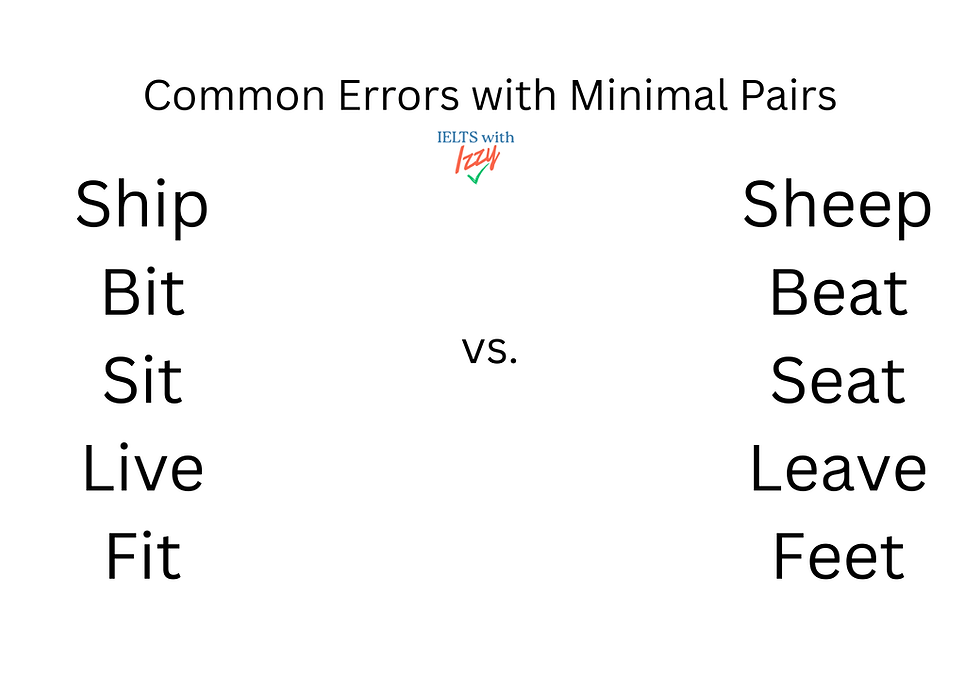
What Are Minimal Pairs and Why Do They Matter?
Minimal pairs are two words that differ by just one sound, either a vowel or a consonant. For example:
bit / beat
cat / cut
pen / pan
These small differences can change the meaning completely. If you say "bit" instead of "beat", your listener might misunderstand you. That is why practicing minimal pairs is essential for clear communication.
You might think these sounds are easy to hear or say, but many ESL students find them tricky because some sounds do not exist in their native language. This causes common errors that affect your speaking and listening.
Common Errors You Make with Minimal Pairs
1. Confusing Vowel Sounds
Vowels are often the hardest part. For example, the difference between /ɪ/ and /iː/ in "ship" and "sheep" can be subtle but important. You might say "ship" when you mean "sheep", which changes the meaning.
Example:
Wrong: I saw a big ship in the field.
Correct: I saw a big sheep in the field.
2. Mixing Up Consonant Sounds
Consonants like /p/ and /b/ or /t/ and /d/ can also cause problems. These sounds are called "voiced" and "voiceless." For example, /p/ is voiceless (no vocal cord vibration), and /b/ is voiced (vocal cords vibrate).
Example:
Wrong: I have a pat on my back.
Correct: I have a bat on my back.
3. Not Hearing the Difference
Sometimes you do not hear the difference between minimal pairs because your brain is not used to distinguishing them. This makes it hard to understand others and to correct your own pronunciation.
4. Overusing One Sound
You might overuse one sound because it feels easier or more familiar. For example, pronouncing all vowels like /æ/ (as in cat) even when the word requires /ʌ/ (as in cut).
How to Avoid These Errors
Listen Actively
You need to train your ear to hear small differences. Listen to native speakers carefully and try to notice how they pronounce words that sound similar.
Use online resources with audio examples of minimal pairs.
Listen to podcasts, songs, or videos focusing on pronunciation.
Repeat what you hear and compare your pronunciation.
Practice Speaking with Minimal Pairs
Practice makes perfect. Use flashcards or apps that focus on minimal pairs. Say the words out loud and record yourself if possible.
Practice pairs like "pen" and "pan", "ship" and "sheep".
Focus on the mouth and tongue position for each sound.
Try to exaggerate the difference at first to make it clear.
Use Visual and Physical Cues
Watch videos showing how to position your lips, tongue, and jaw for different sounds. You can also use a mirror to check your mouth movements.
For example, when pronouncing /iː/ (as in sheep), your lips stretch slightly.
For /ɪ/ (as in ship), your mouth is more relaxed.
Practice Minimal Pairs in Sentences
Once you feel confident with individual words, practice using minimal pairs in sentences. This helps you understand the context and improves your fluency.
Example sentences:
The bat flew at night.
I need a pat on the shoulder.
Ask for Feedback
If possible, ask a teacher, friend, or language partner to listen to your pronunciation and give you feedback. They can point out mistakes you might not notice.
Examples of Minimal Pairs to Practice
Here are some common minimal pairs you can practice regularly:
| Pair 1 | Pair 2 | Pair 3 | Pair 4 |
|-------------|-------------|-------------|-------------|
| ship / sheep | bat / pat | pen / pan | cat / cut |
| bit / beat | fan / van | sit / seat | bed / bad |
| lock / rock | thin / tin | full / fool | cap / cab |
Try to say each pair slowly, then faster, and finally in sentences.
Tips for Improving Your Pronunciation with Minimal Pairs
Record yourself and compare with native speakers.
Practice daily for at least 10 minutes.
Focus on one pair at a time before moving to the next.
Use apps like Forvo, ELSA Speak, or YouGlish for pronunciation help.
Read aloud texts that contain many minimal pairs.
Be patient; mastering sounds takes time.
How Minimal Pairs Help Your Listening Skills
When you improve your pronunciation, your listening also gets better. You start to notice small differences in sounds when others speak. This helps you understand conversations more clearly and respond correctly.
For example, if you hear "ship" but think it is "sheep", you might get confused. Training with minimal pairs sharpens your listening and reduces misunderstandings.
Common Challenges and How to Overcome Them
Fear of Making Mistakes
You might feel shy or afraid to speak because you worry about making errors. Remember, mistakes are part of learning. Practice in a safe environment and focus on progress, not perfection.
Native Language Influence
Your first language might not have some English sounds. This makes it harder to produce or hear them. Try to learn the specific mouth movements and listen carefully to native speakers.
Lack of Practice Time
Busy schedules can limit your practice time. Use small moments during the day to practice, like repeating words while commuting or before sleeping.
Final Thoughts on Mastering Minimal Pairs
You can improve your English pronunciation and listening by focusing on minimal pairs. These small sound differences matter a lot in communication. By listening carefully, practicing regularly, and using helpful tools, you will avoid common errors and speak more clearly.
Start with simple pairs, practice often, and don’t be afraid to ask for help. Your confidence and understanding will grow, making your English more natural and easier to understand.
Keep practicing, and soon you will notice the difference in how you speak and listen.


Comments